
Low-impact mining at one of the world’s richest lithium salars
Centenario-Ratones ranks among the world’s most significant lithium deposits. It holds an estimated 5,000 million cubic meters of brine, with an average lithium concentration of 407 mg/l – equivalent to around 15 million tons of Lithium Carbonate Equivalent (LCE). In 2020, these resources were officially certified under the JORC Code (Joint Ore Reserves Committee), confirming their scale and quality.
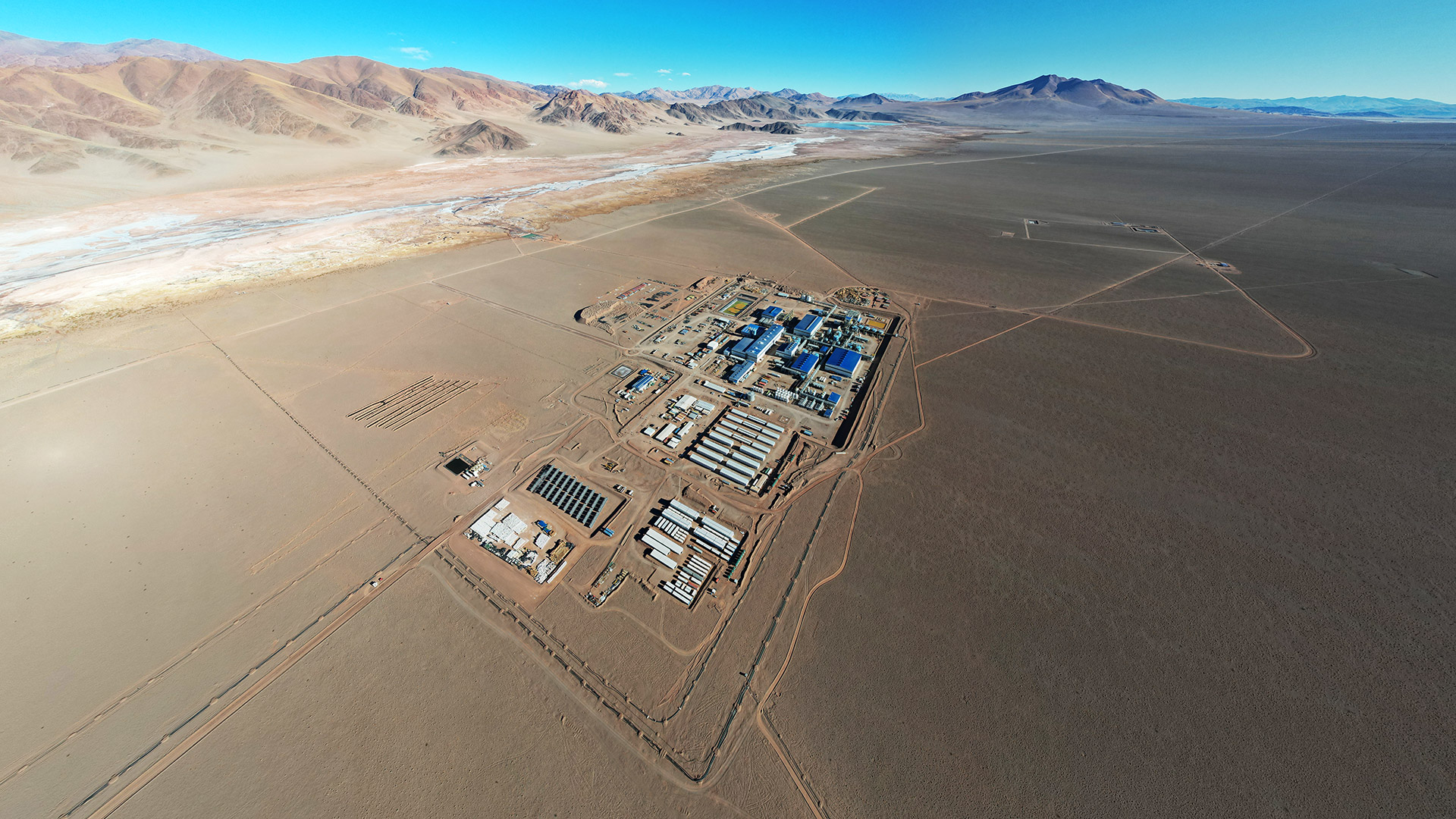
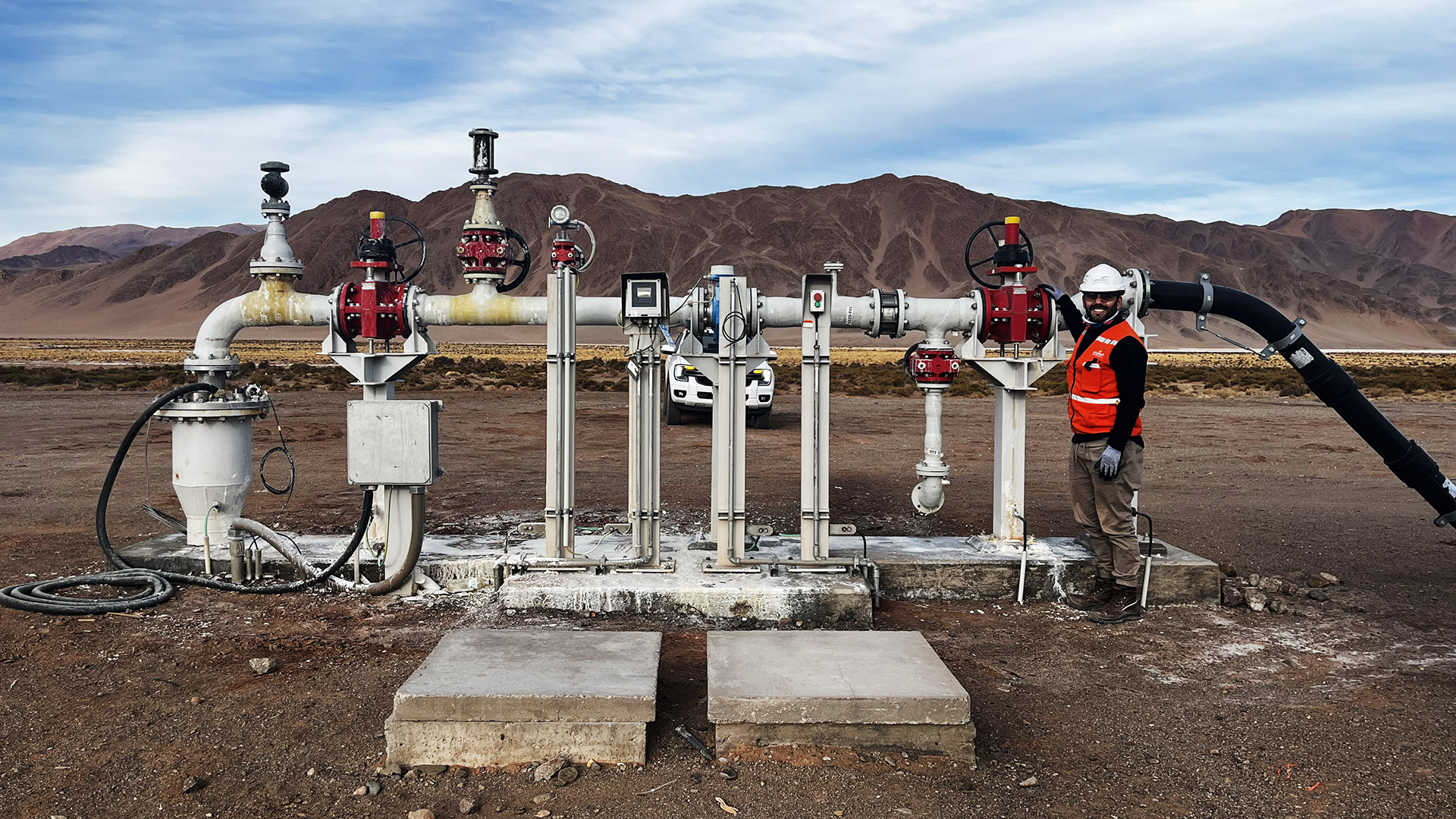
Our operations are guided by a strong commitment to environmental responsibility. We use an innovative direct lithium extraction (DLE) process designed to minimize impact on nature. The lithium-rich brine, a natural saltwater solution ten times more concentrated than seawater, is pumped from wells drilled 400 meters deep. Each of the 20 wells has a minimal surface footprint, with openings just 25 centimeters in diameter.
Once extracted, the brine is transported through a dedicated pipeline network to our processing plant, where it begins its transformation into battery-grade lithium carbonate.
An innovative, high-efficiency extraction process
Once the brine reaches the processing plant, it undergoes several transformation stages. At the heart of the facility lies a breakthrough Direct Lithium Extraction (DLE) process, developed by Eramet Ideas, our Group’s innovation center based in France.
This patented technology, protected by 12 patents, uses an aluminum-based material that acts like a sponge, selectively capturing lithium from the brine. With a recovery rate exceeding 90%, the process is both highly efficient and environmentally responsible. Unlike traditional evaporation ponds, it drastically reduces processing time, producing battery-grade lithium in less than 1 week instead of 18 months, and enables a water recycling rate of 60%.
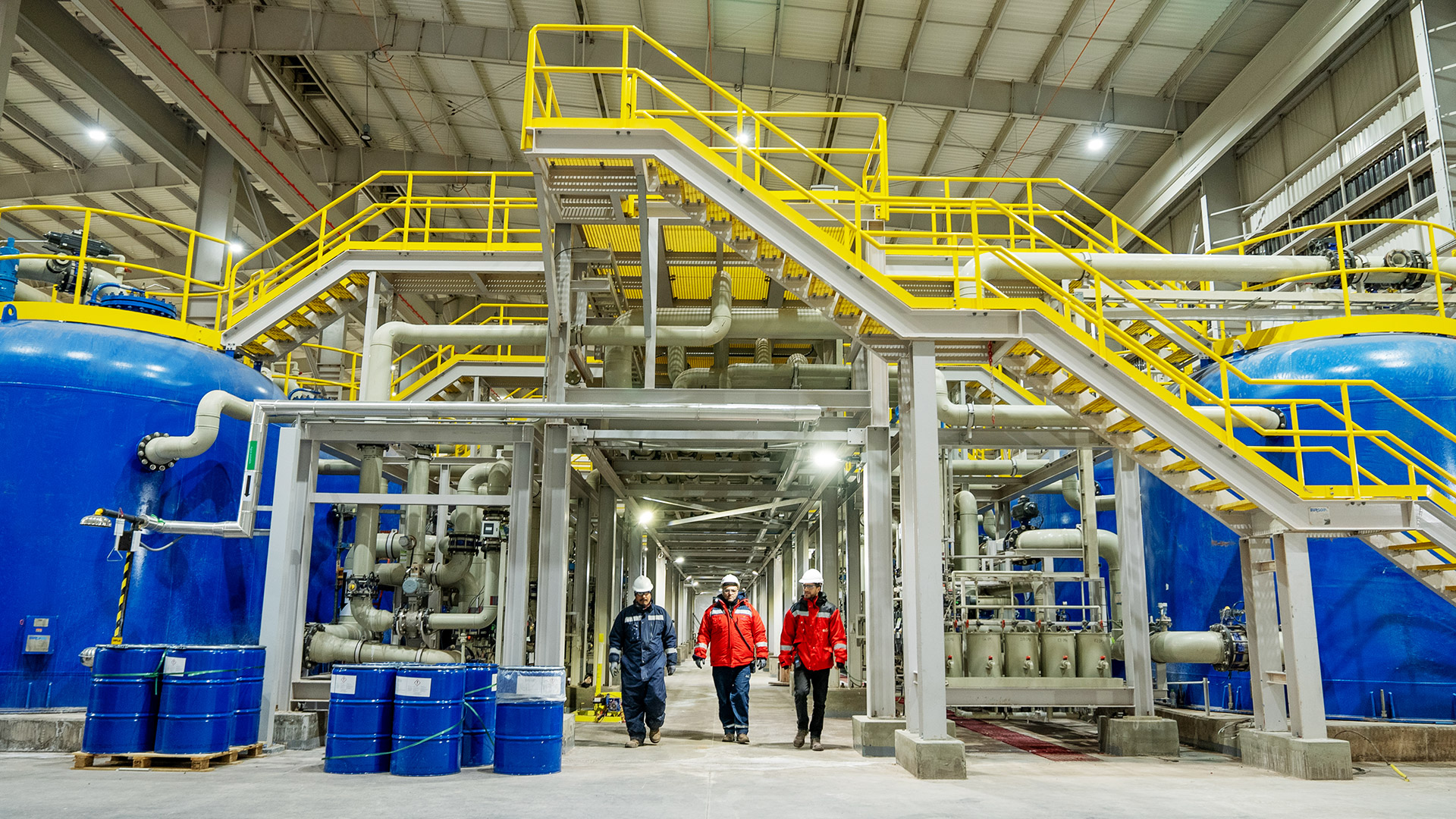
The plant features a high degree of automation, supported by state-of-the-art technologies, including approximately 30,000 automation devices (such as sensors, motors, and valves), with around 6,000 instruments and sensors measuring and reporting process parameters in real time. The plant operates continuously, 24/7, ensuring consistent performance and reliability.
A hybrid electric source
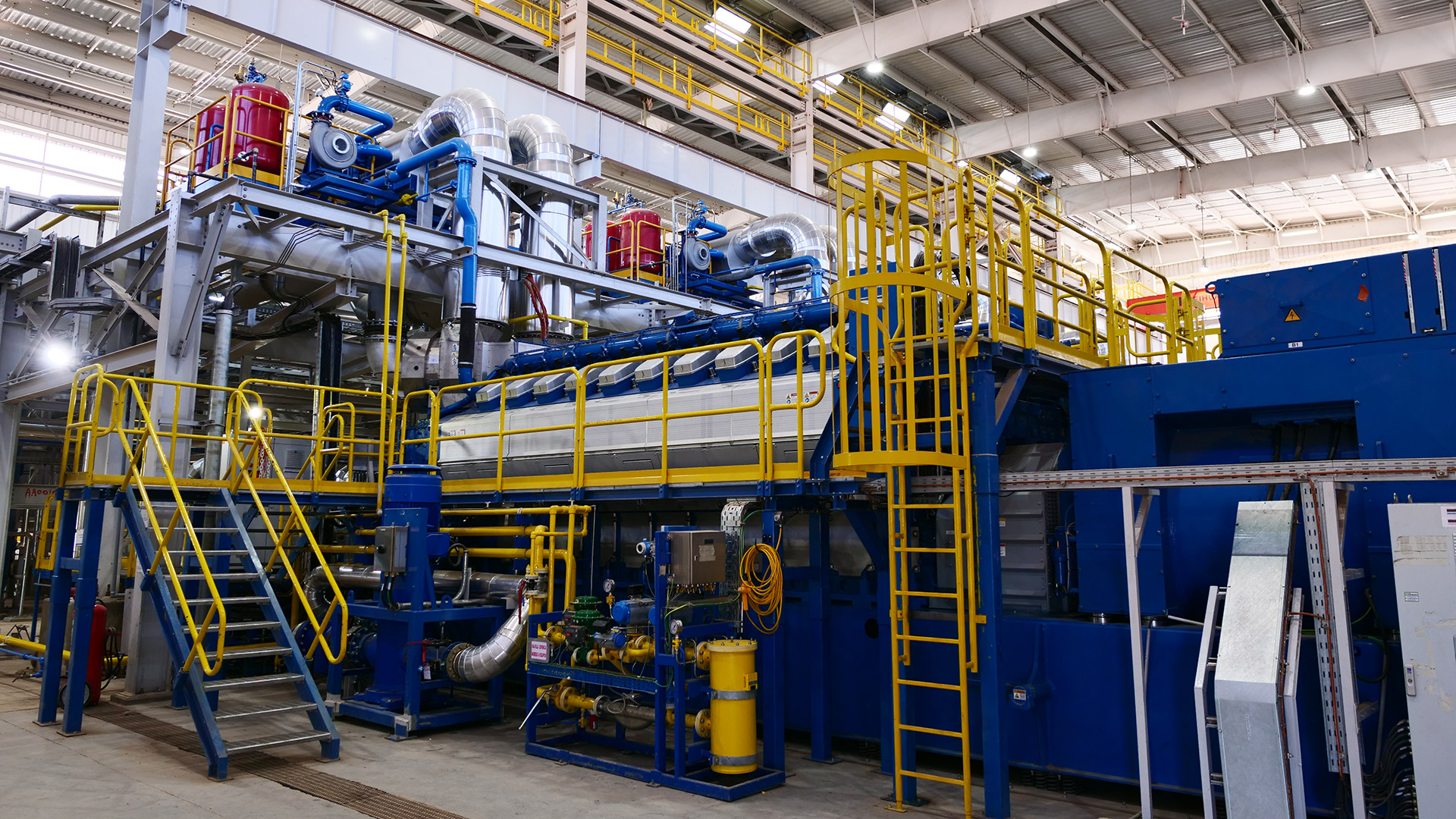
Eramet Eramine’s energy infrastructure relies on a hybrid model that integrates solar power with conventional sources. To sustain its industrial operations, the company runs Argentina’s most powerful Combined Heat and Power (CHP) system, equipped with four 7 MW generators. This installation required the development of a dedicated compression plant, located 320 km from our operation site and building a new gaspipe to link to the gas system.
A major advantage of the CHP system is its capacity to recover exhaust gases, which are then used to cogenerate steam and hot water directly for the production process. This delivers an outstanding energy efficiency of 80% -more than twice that of a conventional combustion engine.
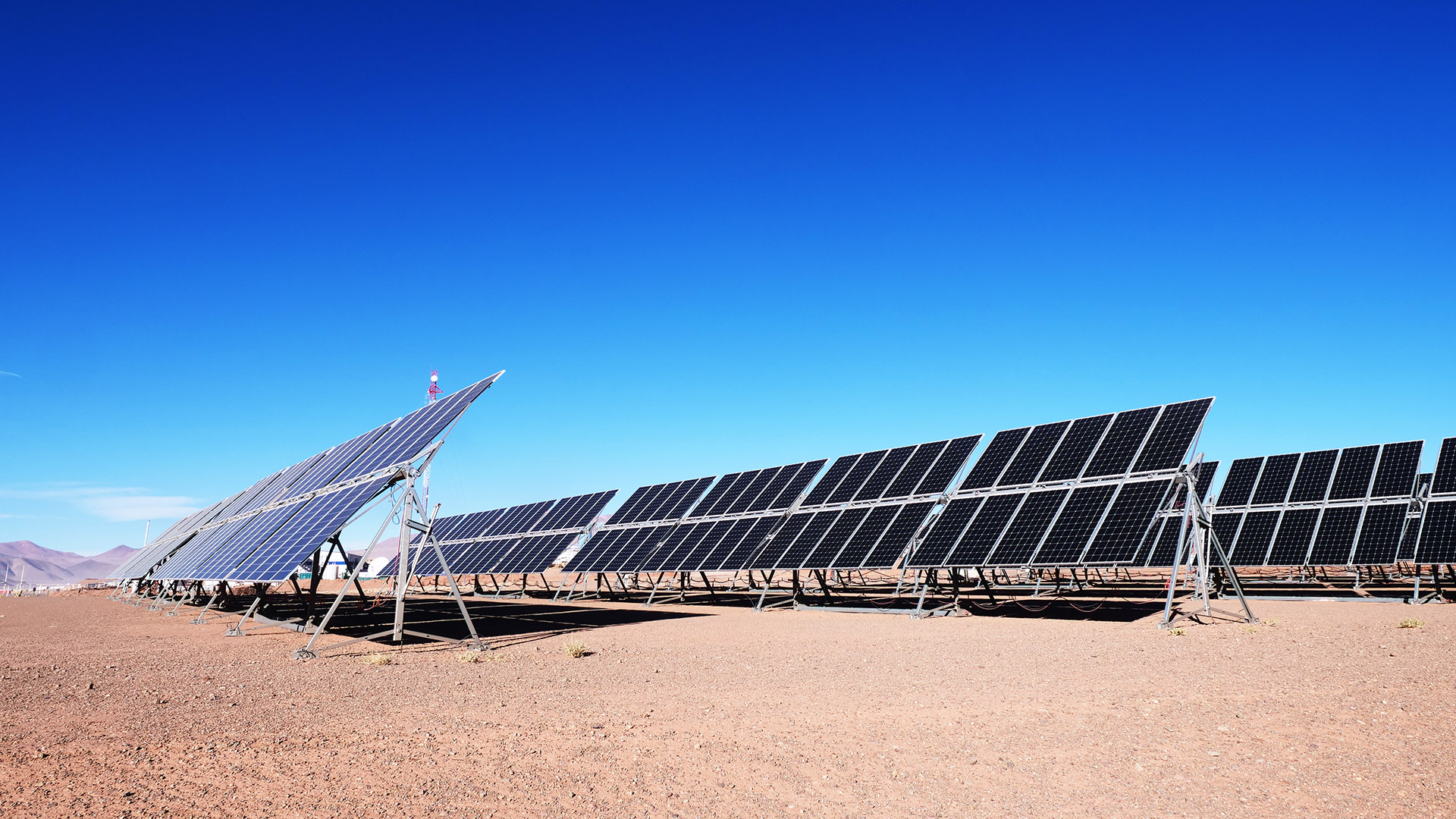
In addition, solar panels with a capacity of 300 kWh have been installed to power the basecamp and training center, further reducing the site’s carbon footprint.