
At Eramine, we implement sustainable practices across our industrial operations. Through advanced technologies such as Direct Lithium Extraction, strict compliance with environmental standards, and a continuous improvement approach, we minimize our footprint while contributing to both local and global environmental goals.
Water management
Water management
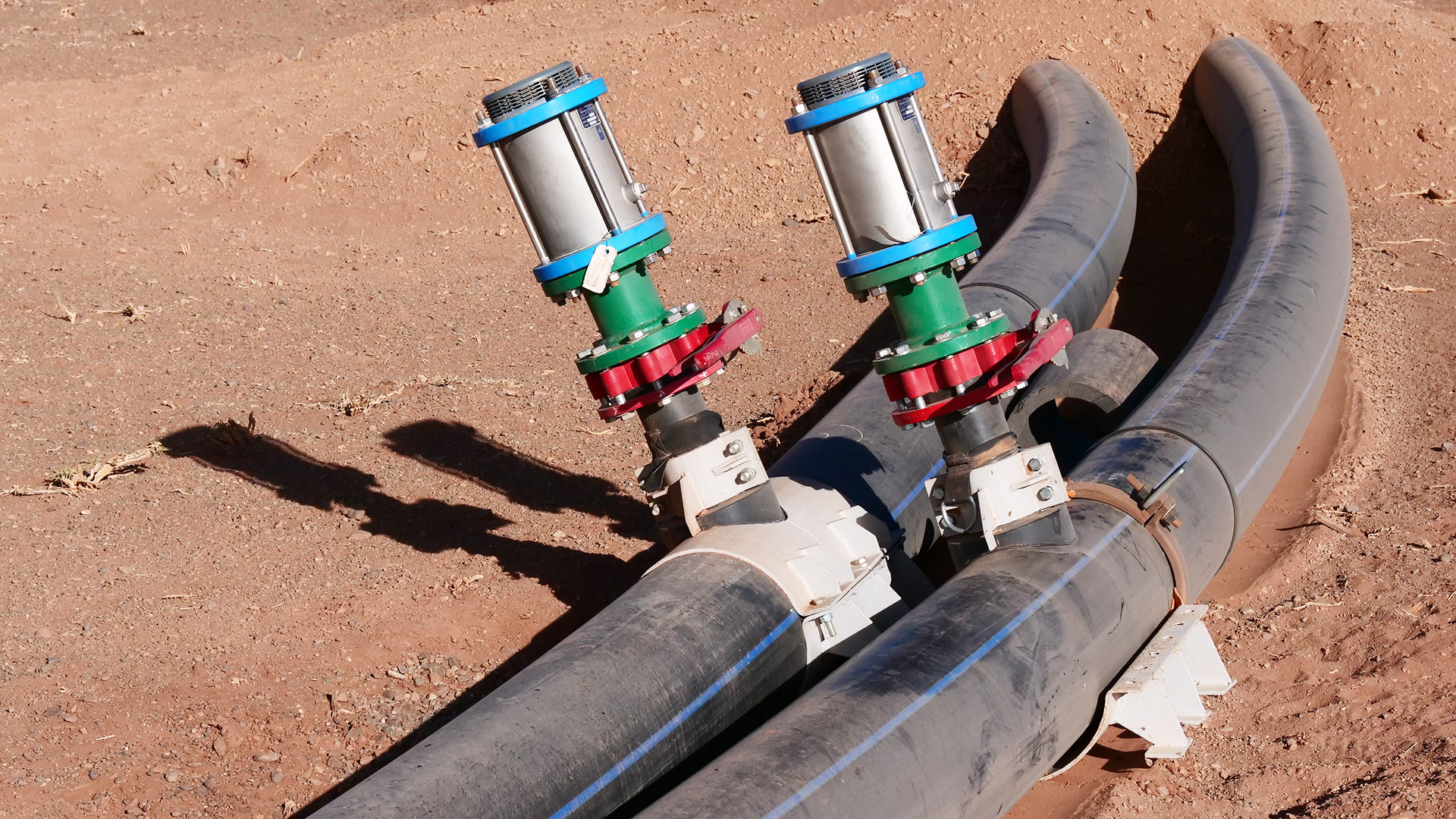 Our production process requires the use of water. Thanks to our long Research & Development efforts, we target a 60% water recycling rate at our plant after the ramp-up. We continue to actively work on optimizing water use and advancing towards even more efficient and responsible management of this vital resource.
The company does not extract or use surface water to avoid competition with human or fauna and flora needs.
We pump non potable water at more than 100 meters deep, with wells. All water catchments are compliant with an authorization given by the Office of Water Resources of the province of Salta.
Closest inhabitants of the project live 11 kilometers from the deposit. They are seven semi-nomad families of puesteros and they use surface water for their needs, as the fauna and flora does.
In addition, to learn about the status of all water sources in the basin of Salar Centenario Ratones, and the weather conditions prevailing in the area, we carry out periodic environmental monitorings with external parties. To take samples and analyze them, we hired the services of an independent laboratory with extensive experience and certifications under both national and international standards, including IRAM 17025 quality certification, which guarantees the reliability of the results obtained.
Environmental monitoring program
Environmental monitoring program
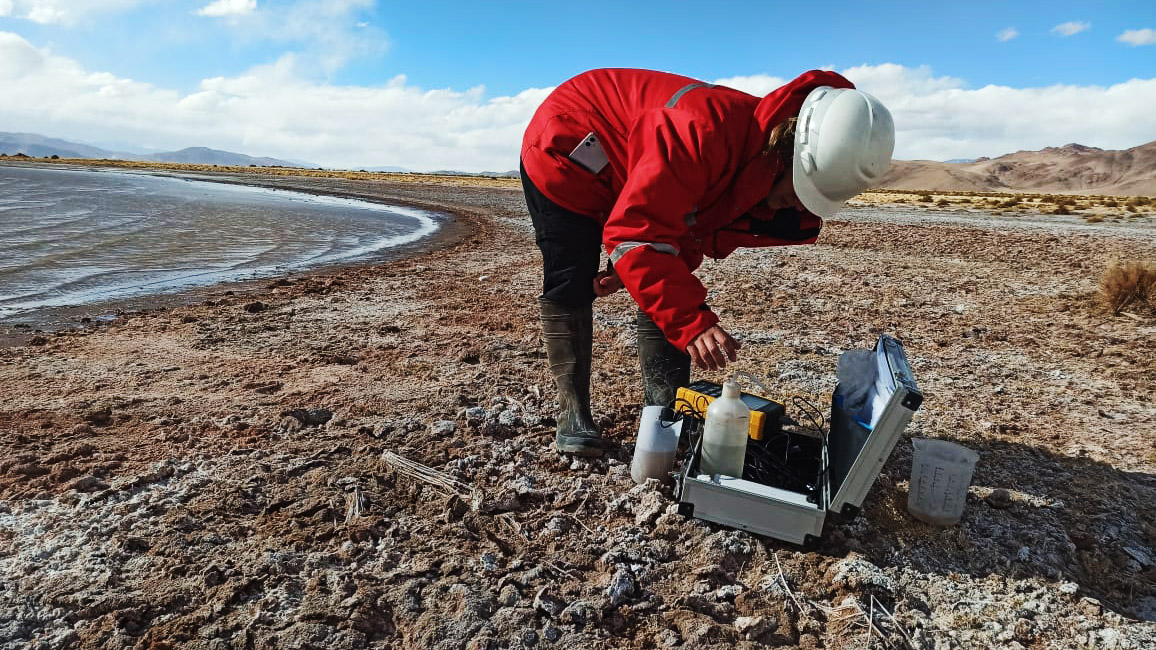
At Eramine, we perform rigorous environmental monitoring as part of our commitment to responsible and transparent mining. In line with the IRMA Standard (Initiative for Responsible Mining Assurance), we implement control mechanisms that not only comply with local regulations but also align with international best practices. This continuous monitoring allows us to prevent, mitigate, and address potential impacts, ensuring a sustainable and environmentally respectful approach to resource management.
The components that are sampled are surface water, groundwater, soil, air quality, environmental noise and sewage effluents. Monitoring is carried by an independent body.
Participatory monitoring guarantees transparency on water withdrawals
Once a year monitoring involves local stakeholders – particularly the puesteros, community and the Secretary of Mining. Our CSR team on the ground in Centenario plays a key role in organizing this dialogue and sharing the results with the communities in an understandable and regular way.
Biodiversity
Biodiversity
Eramine has conducted multiple biodiversity studies:
- Baseline studies
- Identification of protected areas and vulnerable species
- Mapping of habitats
- Critical habitat assessment
- Strong monitoring
The activities have limited impacts on biodiversity. However, we have taken a proactive approach with committing to develop and implement a Biodiversity Action Plan (BAP) aligned with IRMA standard.
Limnology and microbiology
Limnology and microbiology
Also, through limnological and microbiological assessments, we evaluate the biological quality and ecological balance of surface water by analyzing species diversity and other physicochemical parameters. These analyses cover all surface water bodies, including depleted brine discharge.
The studies indicate that our activities have limited impacts on biodiversity. However, Eramine has taken a proactive approach with committing to develop and implement a Biodiversity Action Plan (BAP) following the mitigation hierarchy. A strong monitoring of our activities is conducted to avoid risk.
Water, Soil and Air Quality
Water, Soil and Air Quality
These monitoring activities allow us to verify that environmental components remain within the parameters established by current regulations, enabling timely decision-making to prevent negative impacts.
Beyond meeting regulatory requirements, these studies aim to enhance our understanding of the environmental dynamics of sensitive ecosystems and their surroundings. This knowledge helps us detect deviations and implement preventive or corrective measures to ensure compliance with the environmental commitments undertaken by the company.
Particularly noteworthy are the quarterly water monitoring campaigns, which include: measurement points in wetlands and underground wells; soil quality assessments through sampling at strategic locations; air quality monitoring at three sampling points; and noise level measurements near the Operational Plant.
Waste management
Waste management
 Correct waste management reduces pressure on natural resources and the risk of environmental impacts. In our facilities, we have places that are authorized and appropriately prepared for the temporary storage of recyclable, hazardous, and household waste.
Our categorization of the waste streams generated has the following characteristics:
- Organized according to the current legislation.
- Guarantees traceability by category and place of generation.
- Designed to minimize environmental impacts.
- Promotes awareness of good environmental performance.
- Applied to operational sites in Centenario- Ratones Salar and in the Salta office.
Non-hazardous waste
Municipal solid waste (MSW) generated by our activities in the Centenario-Ratones Camp is disposed of in accordance with the Harmonized Color Code laid down by Argentine national legislation. Employees of Eramine and contractor companies are trained on how to correctly dispose of the waste generated on site according to their composition.
Hazardous waste
This waste is moved and disposed of by companies registered in the Provincial Registry, which are authorized for transportation and final disposal of this type of waste. We have a certificate as hazardous waste generators in our facilities.
Precautionary principle
At Eramine, we apply a preventive approach at the time of decision making, to avoid having to resort to correction, mitigation and/or remediation measures for any impact on an environmental component. This is why we periodically conduct the necessary studies to make decisions based on real data.